
Collector's guide
Types of beer glasses
Every beer glass shape exists for a reason — to hold a head, trap an aroma, keep a beer cold or simply just for looks to add to the drinking experience. This guide walks through the main types, with photographed examples from the archive.
Pilsner glass
Pilsner, Helles, German and Czech lagers
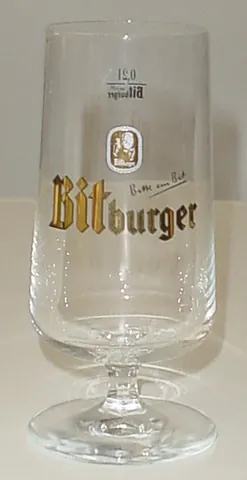
Tall, slender and slightly tapered, the pilsner glass is built to show off a pale lager's colour and hold its head. The narrow base keeps the beer carbonated for longer, while the flared rim supports a thick cap of foam. German breweries in particular issue these in dozens of sizes, from 0,2L tasters to half-litre pokals — which makes them one of the most collected shapes of all.
Weizen glass
Hefeweizen, Weißbier, wheat ales
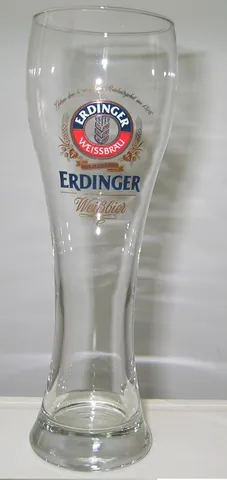
The tall Bavarian vase with a narrow waist and a wide, rounded top. Wheat beers pour with a huge, billowing head, and the weizen glass is shaped to contain it while leaving room for the yeast swirl at the end of the bottle. Most hold half a litre; the curve of the glass also traps the banana-and-clove aromas typical of the style.
Tulip glass
Belgian strong ales, saisons, IPAs
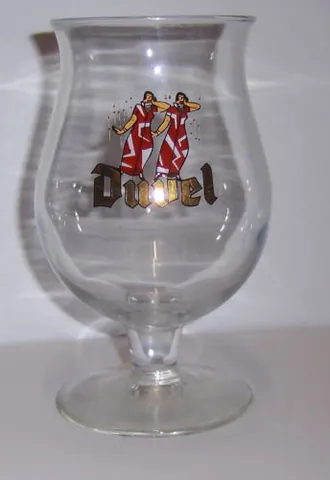
A stemmed glass with a bulbous bowl that flares outward at the lip. The bulb captures aroma, the flare supports the head, and the stem keeps warm hands off the beer. Duvel made the shape famous — the brewery claims its glass was designed so the aroma reaches the drinker before the beer does — and it has since become the default for aromatic Belgian ales and modern IPAs alike.
Chalice and goblet
Trappist and abbey ales, Belgian dubbels and tripels
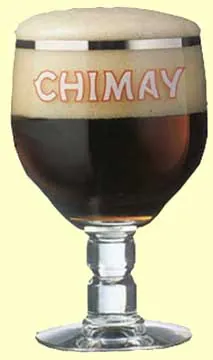
Heavy, wide-mouthed and stemmed — the chalice is the glass of the Trappist breweries. The broad opening lets the beer breathe and makes deep sips easy, while the thick walls and etched bases keep the carbonation lively. Chimay, Orval and Leffe each issue their own, and abbey glassware is a collecting category of its own.
Pint glass
Stouts, porters, English ales
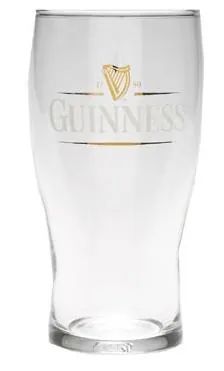
The workhorse of the pub. The British nonic pint has a bulge near the rim that stops glasses chipping when stacked and gives the hand a grip; the Irish tulip pint, immortalised by Guinness, curves inward at the top to hold a creamy head. Simple, sturdy and endlessly branded — no collection is complete without a shelf of them.
Stein and mug
Märzen, Festbier, Bavarian lagers
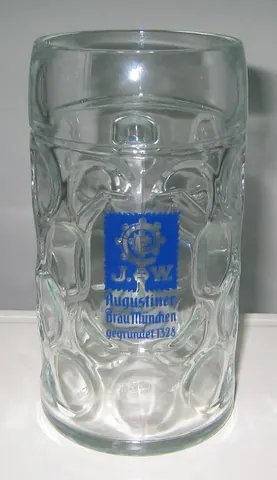
The heavy handled mug — glass, stoneware or pewter-lidded — built for long evenings in beer gardens and festival tents. The handle keeps the beer cool, the thick walls survive enthusiastic toasts, and the one-litre Maß is still the standard serve at Oktoberfest. Older stoneware steins with lids and lithophanes are antiques in their own right.
Specialty and novelty glasses
Whatever the brewery wants to make memorable
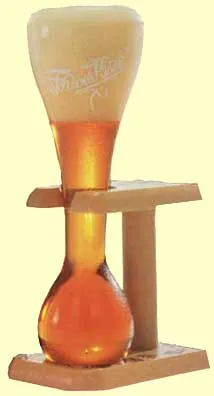
Some breweries go further and commission a shape that exists nowhere else: Kwak's round-bottomed coachman's glass in its wooden stand, yard glasses, boots, horns and brewery-specific one-offs. These are the pieces collectors hunt hardest — they were often made in small runs and never reissued.
Want to see these shapes in the wild? Browse the archive — every glass is photographed and catalogued.
Browse the collection